Connect with us

News

20 States Facing Growing Concern Over Toxic Ant Sightings

Published

on

Jake Nitta/Wikimedia Commons

Ants usually mind their business, but a few troublesome species are stirring up alarm in backyards and parks nationwide. Their venomous stings and rapid spread leave homeowners and experts on edge. Many states are now scrambling to control this creeping threat. Check out 20 places where toxic ant sightings have become an unsettling new worry.

Texas

Texas
Wing-Chi Poon/Wikimedia Commons

Rasberry crazy ants are swarming Southeast Texas, blanketing lawns and crawling into homes. Power boxes short-circuit due to massive colony movement. Unlike native ants, they reproduce aggressively and resist many treatments. Extermination efforts grow expensive as neighborhoods struggle to keep infestations under control.

Georgia

Georgia
Nelynnnnn/Wikimedia Commons

Agricultural officials in Georgia cite fire ants as a major issue for both crops and livestock. Mild winters help colonies persist while mounds pop up on properties statewide. Many pesticides prove ineffective, which allows these resilient ants to spread into new counties each year.

Louisiana
Louisiana
Richard May/Wikimedia Commons

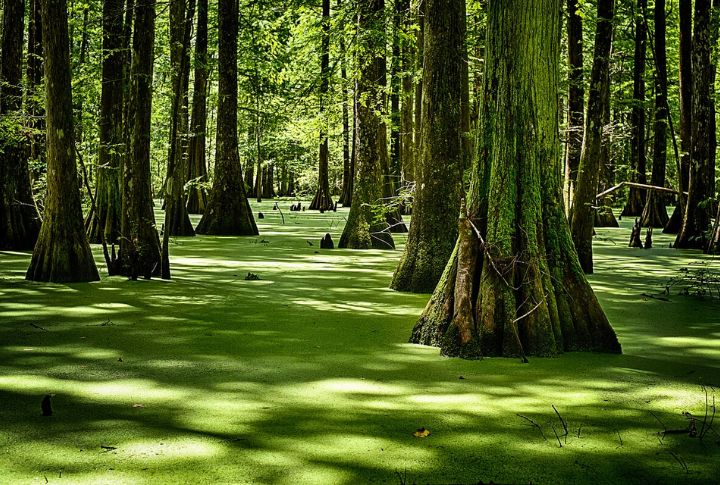
Floodwaters aren’t slowing down fire ants in Louisiana—they’re helping them float to new territories. These waterborne clusters survive extreme conditions and bite with little warning. Swampy conditions and rising humidity support super colonies that thrive in both rural areas and residential backyards.

Mississippi 

Mississipi
Wikimedia Commons

Cotton growers and cattle ranchers in Mississippi are dealing with ant-induced losses. Mounds cover pastures and road edges, while livestock fall victim to swarming attacks. Winter temperatures rarely dip low enough to reduce colonies, which leads to constant alerts and ongoing control efforts.

Alabama

Alabama
 Steven Paultanis/Wikimedia Commons

Ant mounds are popping up across Alabama in record numbers. They’re causing blackouts, pushing out native insects, and even driving birds away. Rural and urban areas alike are affected. Homeowners pour money into pest control, but the colonies keep spreading faster than they can be stopped.

South Carolina

South Carolina
Judy Gallagher/Wikimedia Commons

South Carolina’s latest issue stems from hybrid ants formed between fire ants and native species. These new hybrids display heightened aggression and broader resistance. Officials have tracked their presence in more than 40 counties, with attacks increasingly reported on golf courses and in public parks.

Arkansas

Arkansas
MOs810/Wikimedia Commons

As fire ants push northward, Arkansas enforces quarantine zones for soil and mulch. Colonies continue to adapt to changing temperatures, maintaining strongholds in colder areas. Mound counts rise particularly fast in rural counties, which raises concerns for agriculture and residential infrastructure. 

Oklahoma

Oklahoma
MJN2000/Wikimedia Commons

Ant colonies have blanketed Oklahoma’s southern regions. Neither droughts nor treatments appear to slow their expansion. Once settled, mounds multiply across yards and farmland. Residents report the need for repeat applications while local officials prepare updated containment plans to curb further spread.

Tennessee
Tennesse
Melissa McMasters/Wikimedia Commons

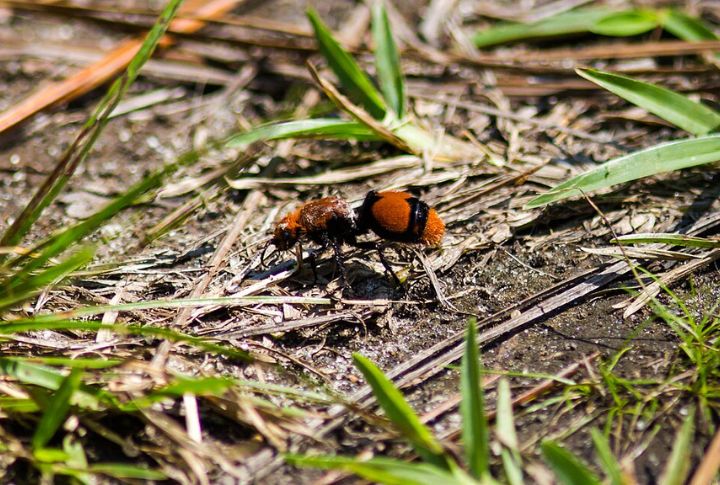
Middle Tennessee has recently confirmed multiple infestations across previously unaffected zones. Quarantine rules now apply to nurseries and landscaping products. Warm-weather seasons allow colonies to flourish. In turn, native species decline as invasive ants outcompete them for food and territory.

North Carolina

North Carolina
Jake N./Wikimedia Commons

Mountain towns in North Carolina now see infestations where fire ants weren’t expected before. Storm systems dislodge colonies and scatter them across trails and farmland. The state’s agriculture department advises hikers and homeowners to stay alert, especially after rain or flooding.

Virginia

Virginia
Judy Gallagher/Wikimedia Commons

Each year, fire ants move farther north through Virginia. Public parks, sports fields, and even schoolyards report mounds. Unusually mild winters help colonies survive longer. Moreover, extension offices urge outdoor enthusiasts to inspect equipment before relocating it to uninfested areas.

California

California
S. Rae/Wikimedia Commons

Argentine ants dominate California’s suburban terrain. These massive colonies, often spanning hundreds of miles, outcompete local insects and birds. Farmers report crop damage due to aphid farming behavior. Because of their size and structure, managing or eliminating them presents a huge logistical challenge.

Arizona
Arizona
Insects Unlocked /Wikimedia Commons

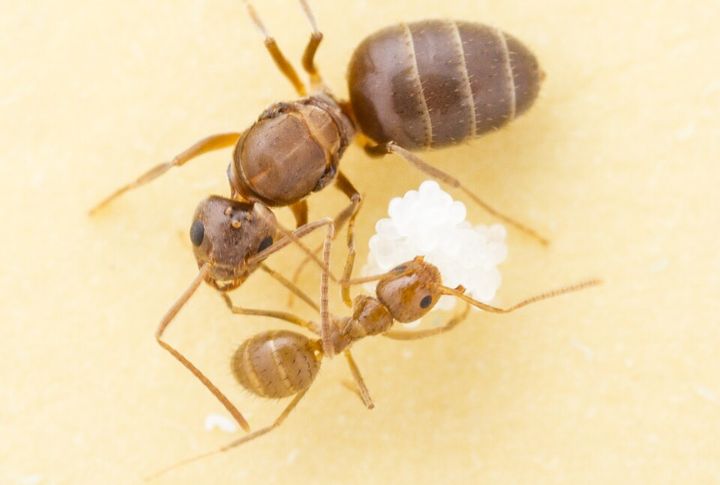
In Phoenix and surrounding areas, tawny crazy ants crawl into electronics and damage HVAC units and vehicles. Rapid recovery after treatments makes them particularly difficult to manage. Local pest control services now specialize in fighting these ants, especially during peak nesting months.

New Mexico
New Mexico
Mike Lewinski/Wikimedia Commons

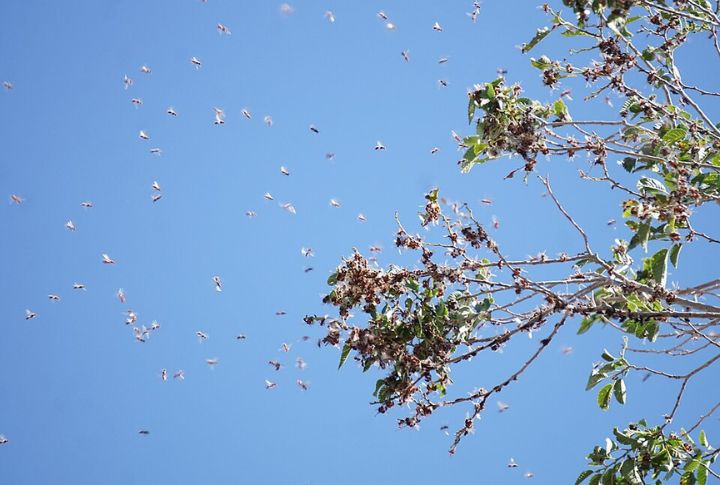
Irrigation lines and shaded lawns create ideal habitats for fire ants in New Mexico’s arid zones. Ranchers encounter more livestock injuries, largely in rural counties. As development increases, colonies hitch rides in soil and landscaping supplies, which leads to fast, uneven spread.

Nevada

Nevada
Magdalena Smyczek/Wikimedia Commons

Red fire ants in Nevada survive desert conditions by nesting in irrigated areas, most commonly near golf courses. Emergency rooms report rising bite-related visits during summer. State officials monitor valley regions where sightings concentrate, hoping to prevent larger infestations before they take hold.

Utah
Utah
CGP Grey/Wikimedia Commons

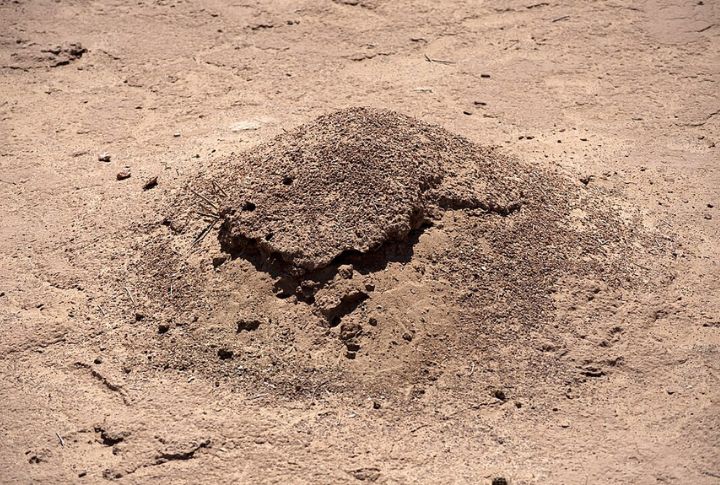
St. George reports Utah’s earliest confirmed fire ant mounds. Statewide alerts follow, especially for residents near parks and gardens. Officials track the ants to prevent expansion toward central Utah. Besides that, conservationists warn about possible threats to sensitive species like the desert tortoise.

Kentucky
Kentucky
Junglecat/Wikimedia Commons

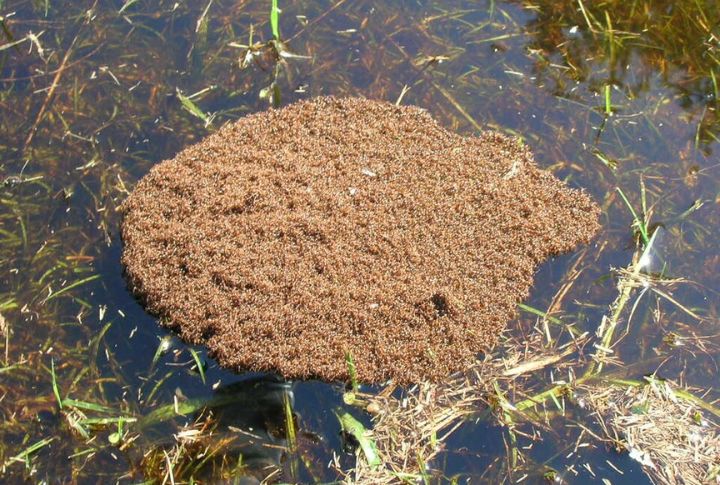
Southern Kentucky is seeing more fire ants than ever. Sod deliveries face inspections as mounds appear in farms, parks, and landscaped areas. Consistent rain and heat give the ants perfect soil to move quickly. Local gardeners now spot infestations where there were none just weeks ago.

North Florida
North Florida
Davefoc/Wikimedia Commons

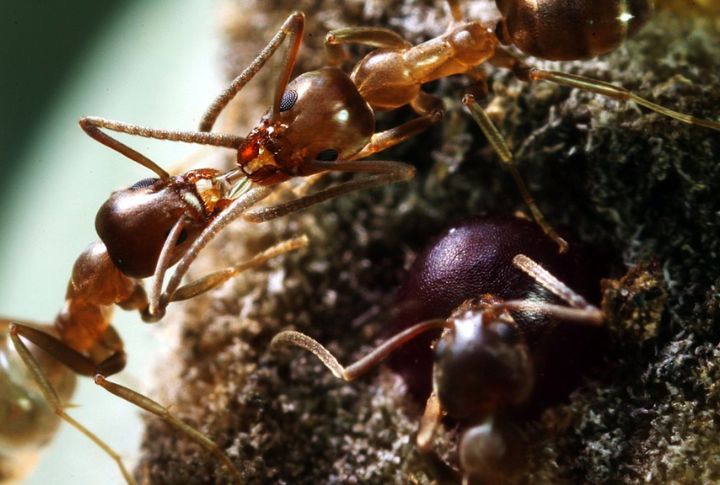
Near Jacksonville, tawny crazy ants have begun displacing older fire ant colonies. Electronics fail as ants swarm appliances and outlets. Their resistance to common baits adds to the problem. Residents notice infestation spikes in damp areas around basements and garage foundations.

Missouri Confirms New Ant Outbreak Zones

Missouri Confirms New Outbreak Zones
Jake N./Wikimedia commons

Southern Missouri faces fire ant outbreaks, especially around the Ozark foothills. Rural residents spot mounds in pastures and gardens. Pest alerts target counties with mild winters. Local agencies ramp up public workshops teaching safe identification and responsible extermination.

Maryland Faces Hidden Fire Ant Pockets
Maryland Faces Hidden Fire Ant Pockets
Love Ant Xiaobai/Wikimedia Commons

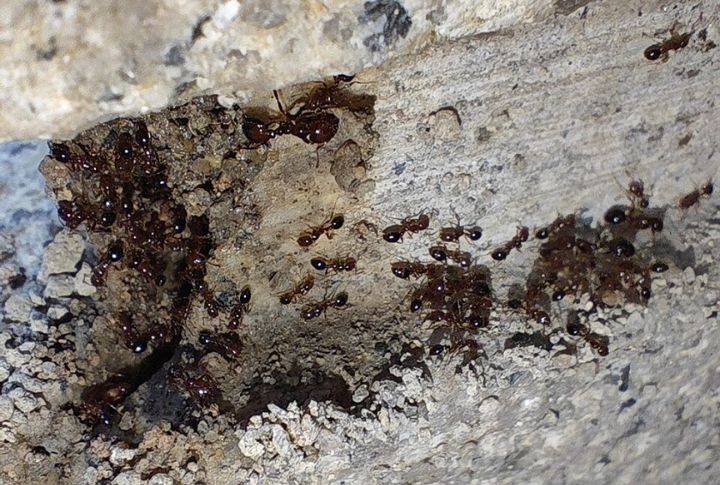
Port cities in Maryland report the first confirmed fire ant sightings. Experts trace their arrival to shipping routes. Nests are highly defensive and put outdoor recreation at risk. Bee populations and other pollinators may suffer as invasive colonies gain ground.

Continue Reading
Click to comment

Leave a Reply

Your email address will not be published. Required fields are marked *

News

10 Interesting Facts About The Zanclean Megaflood

Published

on

Paubahi/Wikipedia

A massive flood, lasting just over a decade, completely transformed the Mediterranean. This astonishing event has baffled scientists for years. What exactly happened when the Atlantic poured into the dry basin? The Zanclean Megaflood left clues in the form of unusual landforms, and its impact stretches far beyond the waters themselves—into history, climate, and ecosystems. Swipe to uncover ten fascinating facts about the Zanclean Megaflood.

Mediterranean Refilled In Just 2 To 16 Years

Christian Ferrer/Wikimedia Commons

The Zanclean Megaflood wasn’t a gradual event—it occurred over a span of just 2 to 16 years. Previous theories suggested a 10,000-year refilling process, but this discovery turned that idea upside down. Geological evidence, including rapid erosion channels and sediment deposition, confirms the flood’s fast pace.

Flood Waters Rushed At 72 Miles Per Hour

Paubahi/Wikipedia

At its peak, the Zanclean Megaflood’s water speed was a staggering 72 miles per hour (32 meters per second). That’s faster than a car on the freeway! The torrent carved through the seabed with such force that it reshaped entire coastlines and left behind permanent geological evidence.

Larger Than Any Known Flood In History

NOAA/Wikimedia Commons

No natural or man-made flood has ever released water at such an incredible rate, reaching up to 100 million cubic meters per second. This immense flow was enough to reshape the Mediterranean’s seafloor and reconfigure the region’s underwater channels.

Carved Deep Geological Features

Mrs V Bryant/Wikimedia Commons

Ever wondered how some features look like they’ve been reshaped overnight? The Zanclean Megaflood left behind asymmetric ridges and deep channels carved into the marine bed. These features were formed by the forceful surge of water that rapidly eroded and sculpted the seabed over a few years.

Changed A Salt Desert Into A Sea

Sharanbhurke/Wikimedia Commons

Before the flood, the Mediterranean was a dry, salty wasteland, evaporated by the Messinian Salinity Crisis. The flood brought it back to life in a matter of years and changed it from a barren salt flat into the thriving, biodiversity-rich sea we know today.

Flood Came From The Atlantic Ocean

Andreas Meck/Wikimedia Commons

Just picture the Atlantic Ocean suddenly pouring into the Mediterranean at unprecedented rates. A breach in the Gibraltar Strait unleashed a massive surge of water and refilled the basin. The immense flow carved new underwater channels and almost overnight reshaped the Mediterranean’s geography.

The Mediterranean Was Isolated For 200,000 Years

Vyacheslav Argenberg/Wikimedia Commons

Before the flood, the Mediterranean had been cut off from the Atlantic for more than 200,000 years. This isolation caused the sea to dry up, leaving behind thick salt deposits. When the flood arrived, it was like nature pressing “reset” on a millennia-long drought.

Evidence Hidden Beneath The Sea

BacLuong/Wikimedia Commons

Much of the flood’s evidence was hidden deep under the Mediterranean’s waters. Scientists used technology, like seismic reflection, to “see” through the sea bottom and uncover hidden channels, ridges, and sedimentary layers. Such discoveries revealed the flood’s immense scale and provided insights into the region’s ancient past.

Scientists Discovered The Megaflood Through Submarine Canyons

Tpedersen/Pixabay

Researchers identified the scale of the Zanclean Megaflood by studying deep underwater canyons, like the Noto Canyon, that were formed by the floodwaters. These canyons act as natural records of the flood’s path and provide key evidence about the flow’s power.

The Megaflood Contributed To Global Climate Shifts

Mount Rainier NPS/Wikimedia Commons

The rapid refilling of the Mediterranean had significant impacts on global climate patterns. The influx of freshwater into the Atlantic likely disrupted ocean currents, which could have triggered shifts in weather patterns and potentially influenced the global climate during the early Pliocene.

Continue Reading

News

10 Devastating Fires That Scarred The U.S.

Published

on

CAL FIRE_Official/Wikimedia Commons

Fire has the power to destroy lives, reshape cities, and leave scars on history itself. Across the United States, some blazes have grown into infamy, remembered for their devastating impact and the resilience they inspired. Here are ten deadly fires in America that shaped its history forever.

Los Angeles Fire Of 2025

Grigory Heaton/Wikipedia

The Palisades and Eaton Fires in Los Angeles have burned over 37,800 acres, destroyed more than 12,000 structures, and claimed at least 25 lives. With more than 200,000 residents evacuated, firefighters continue battling relentless flames. According to Cal Fire, it is one of the most destructive wildfires in the history of southern California.

Lahaina Fire Of 2023

State Farm/Wikimedia Commons

On August 8, 2023, the Lahaina Fire tore through the town of Lahaina, Hawaii, and became the deadliest wildfire in the U.S. in over a century. The destructive blaze claimed 102 lives, with many more still unaccounted for. It obliterated the town, even claiming the iconic banyan tree, despite efforts to protect it.

Camp Fire Of 2018

NASA, Joshua Stevens/Wikipedia

Fueled by high winds and drought, a catastrophic wildfire leveled the town of Paradise in California on November 8, 2018, destroying 18,000 structures. Tragically, eighty-five lives were lost, and 50,000 people were displaced. In the aftermath, Pacific Gas & Electric was found liable for sparking the fire.

Rhododendrites/Wikimedia Commons

Pyrotechnics sparked this Rhode Island blaze on February 20, 2003, and led to the fatal loss of 100 concertgoers’ lives in less than five minutes. Fumes and the overcrowded exits turned the venue into a dangerous snare. Survivors testified about the confusion and chaos of the panicked crowd.

Oakland Firestorm Of 1991

Wikimedia Commons

Over the span of two days, a reignited grass fire in Oakland Hills, California, destroyed 2,900 buildings, killed 25, and injured 150. This firestorm spread across 1,520 acres and caused $1.5 billion in damages. For many, the rapid spread of the blaze left them with little more than moments to escape.

Texas City Disaster Of 1947

U.S. Chemical Safety Board/Wikimedia Commons

In Texas City, a ship filled with ammonium nitrate exploded on April 16, 1947, igniting fires that led to the loss of nearly 600 people’s lives. The blast’s force was so strong that it shattered windows 40 miles away. To this day, it remains one of the largest non-nuclear explosions in history.

Cloquet Fire Of 1918

Wikipedia

Sparks from a rail line started a firestorm on October 12, 1918. As a result, the fire killed 453 people, destroyed 38 towns, and left thousands homeless. The flames consumed 250,000 acres, and with heat so fierce, the fire reportedly melted rail tracks in its path.

Great Fire Of 1910

National Photo Company/Wikipedia

Burning across northeastern Washington, northern Idaho, and parts of Montana, this wildfire consumed 3 million acres in just two days. Known as the “Big Blowup,” it claimed 87 lives. Because of the intense nature of the flames, their weather system was created, including fire tornadoes.

San Francisco Fire Of 1906

Arnold Genthe/Wikipedia

After the infamous earthquake on April 18, 1906, fires engulfed San Francisco, California, and consumed 500 city blocks. Gas leaks and toppled lanterns turned ruins into infernos. Over 3,000 lives were lost, and fire crews were forced to dynamite buildings to prevent further spread.

Peshtigo Fire Of 1871

T.M. Fowler & Co.; Charles Shober & Co.; Chicago Lithographing Co./Wikimedia Commons

On October 8, 1871, the Peshtigo Fire devastated Peshtigo, Wisconsin, and became “the most devastating forest fire in American history,” according to the National Weather Service. The inferno consumed 1.2 million acres and claimed over 1,500 lives. Its unimaginable heat turned sand into glass and even incinerated animals mid-flight.

Continue Reading

News

10 Red Flags That Someone Is Faking Competence

Published

on

RDNE Stock project/Pexels

Ever met someone who’s just too confident for their own good? They act like they’ve figured it all out, except something’s off. You’re not imagining things. Here are 10 signs that someone’s secretly incompetent and doing their best to cover it up.

Overly Defensive

Fauxels/Pexels

Getting defensive when receiving feedback can reveal uncertainty about their abilities. They may reject criticism and resist acknowledging that with some guidance or effort, they could improve and gain more confidence in their skills.

Blames Others

Yan Krukau/Pexels

We’ve all had our fair share of “bad luck,” but when someone constantly shifts the blame to others, it might be a sign they’re avoiding ownership of mistakes. It’s easier to point fingers than admit they don’t have all the answers themselves.

Overpromises And Underdelivers

VinzentWeinbeer/Pixabay

They’re enthusiastic about taking on every project, and when it comes time to deliver, the results don’t match the promise. Overcommitting—something we all do now and then, often hides an underlying fear of falling short or not meeting expectations.

Avoids Accountability

Monstera Production/Pexels

Nobody’s perfect, but avoiding responsibility for mistakes by making excuses can be a red flag. While it’s tempting to dodge embarrassment, meaningful development happens when we confront our errors and turn them into learning experiences.

Avoids Detailed Questions

Christina Morillo/Pexels

When asked for specifics, they deflect or give vague responses. This isn’t due to a lack of willingness to share but stems from their own uncertainty about the details. Their unclear answers reveal gaps in understanding, even while trying to maintain an appearance of control.

Avoids Collaboration

Rodeo Software/Pexels

Teamwork has the potential to highlight gaps in ability, so they go to great lengths to avoid it. Preferring to work alone or dodging collaborative environments allows them to hide their shortcomings. This approach is often rooted in insecurity and a fear of being overshadowed.

Overexplains Simple Concepts

Khwanchai Phanthong/Pexels

When someone consistently over-explains even the simplest tasks, it might be because their understanding is lacking. Instead of giving a concise answer, they add unnecessary details to mask their lack of confidence in the subject.

Leans On Jargon

Yan Krukau/Pexels

Sometimes, a well-placed technical term can make you sound knowledgeable, but relying too much on jargon can signal that they’re hiding a lack of deeper understanding. It’s a clever way to sound smart. Nevertheless, real expertise comes from simplicity and clarity.

Relies On Others To Validate Their Skills

RF._.studio/Pexels

They depend on others to endorse their competence rather than proving it themselves. Frequent name-dropping or highlighting others’ praise can be an attempt to mask insecurity or a lack of actual ability, shifting focus away from their own shortcomings.

Fixates On Small Details

ANTONI SHKRABA production/Pexels

Some people fixate on minor details, which might seem like perfectionism, yet it can be a way to steer clear of larger problems. They may get caught up in the little things to avoid confronting bigger, more intimidating challenges.

Continue Reading

Trending

Copyright © 2025 CityStateZipCode.com