Connect with us

History

How An Abandoned Trail Helped Build The Mighty Hoover Dam

Published

on

Wikimedia Commons

Beneath the desert heat and the shadow of the Hoover Dam lies a forgotten rail line that once powered one of America’s greatest builds. It didn’t just carry cargo—it carried progress. This is the story of how a railroad quietly made history happen.

Essential Supply Line To The Dam Site
Essential Supply Line To The Dam Site
Wikimedia Commons

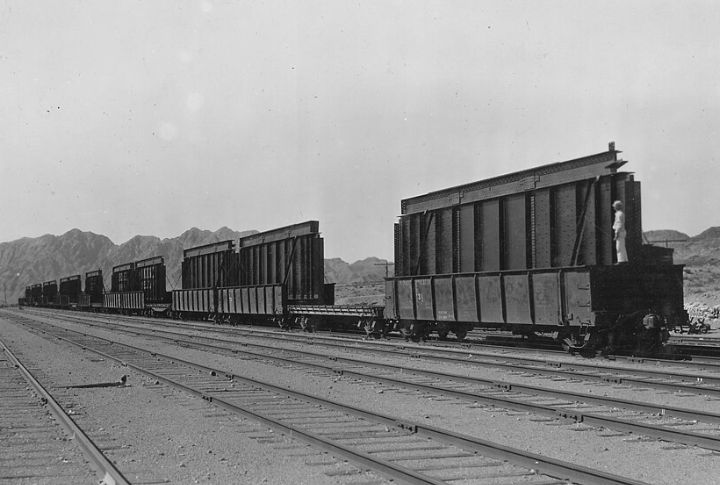
Timber, concrete, and machinery arrived in relentless waves as locomotives ferried essential cargo directly to the dam site. Without the dedicated supply line, the logistical hurdles of transporting tons of materials across rocky terrain would have slowed progress dramatically. The tracks ensured efficiency and allowed workers to focus on assembly rather than transport.

Engineering Through Harsh Terrain
Engineering Through Harsh Terrain
Wikimedia Commons

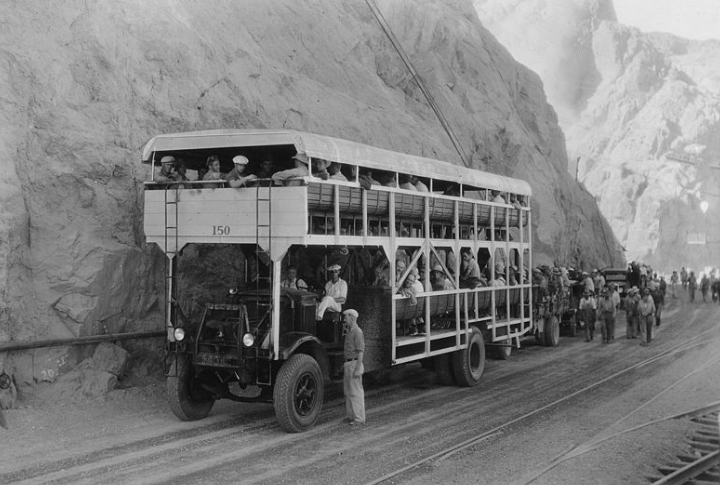
Building a railroad across Nevada’s rugged desert was no simple feat. Engineers carved through rock, reinforced unstable ground, and crafted custom railcars with dust-resistant brakes to handle the brutal environment. Their efforts turned an inhospitable landscape into a fully operational artery feeding one of America’s greatest engineering feats.

Driving The Dam’s Construction Forward
Driving The Dam’s Construction Forward
Wikimedia Commons

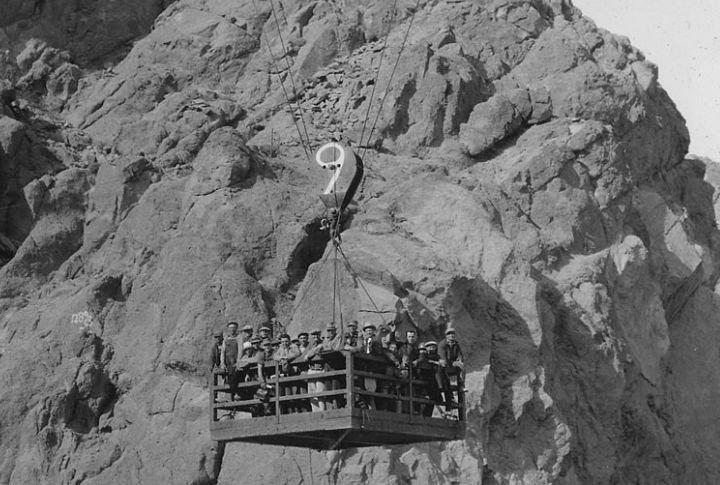
As the project advanced, steam-powered locomotives became the backbone of progress: They hauled raw materials to towering concrete forms, ultimately shaping the colossal dam’s formation. The rhythmic clatter of iron wheels against steel rails echoed through the canyon, a constant reminder that every load delivered brought the structure closer to completion.

The Workforce Behind The Tracks
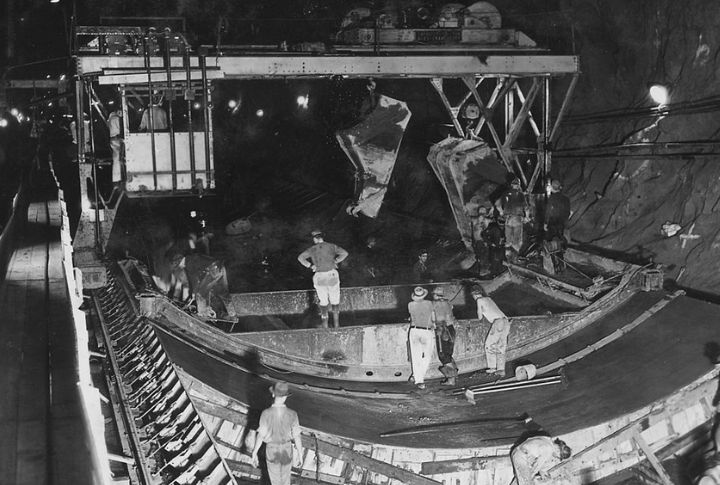
The Workforce Behind The Tracks
Wikimedia Commons

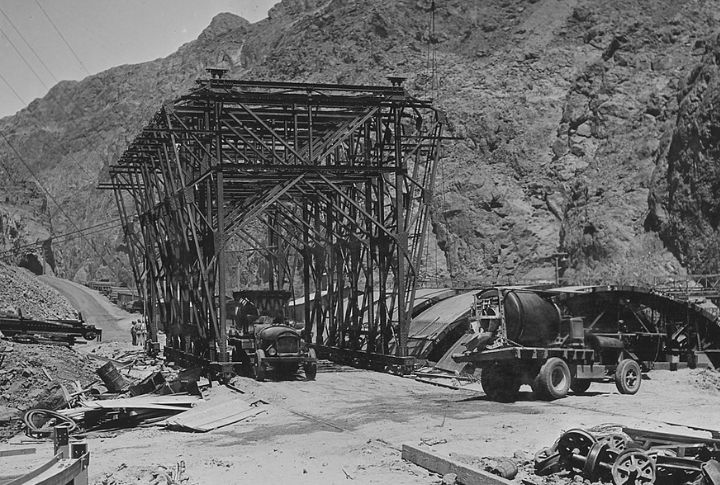
Beyond the machinery, thousands of laborers depended on the rail network for their livelihoods. Some worked tirelessly laying tracks, while others maintained engines or ensured freight moved smoothly. Their daily routines revolved around precision and endurance, forging an unsung workforce that sustained construction.

Connecting Boulder City To The Dam
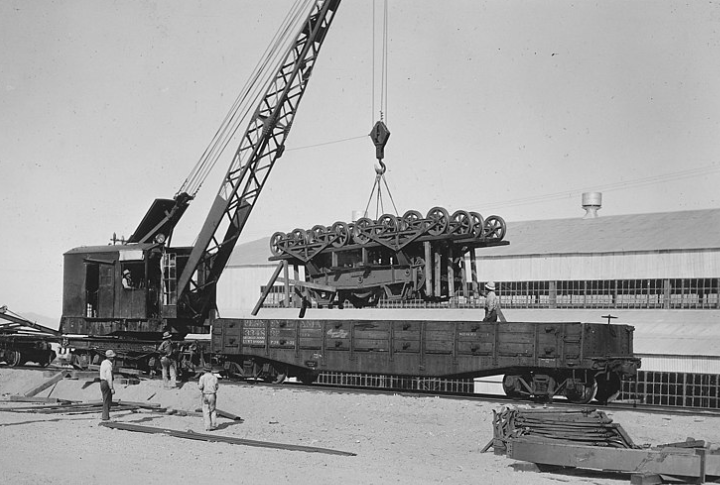
Connecting Boulder City To The Dam
Wikimedia Commons

Beyond moving materials, the railroad linked workers to Boulder City—home to families, schools, and shops. This daily connection supported a stable workforce and turned a desert outpost into a functioning town. Reliable rail transit helped thousands live nearby while contributing to the construction of one of America’s most ambitious projects.

Boulder City’s Smart Infrastructure Design
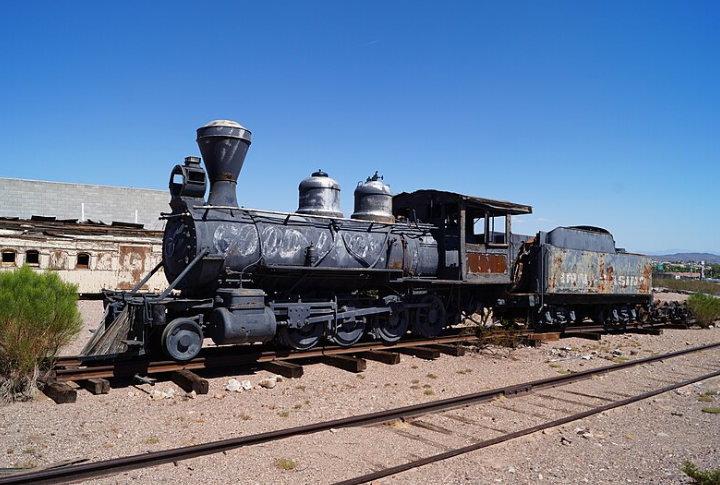
Boulder City’s Smart Infrastructure Design
NearEMPTiness/Wikipedia

The success of Hoover Dam relied heavily on Boulder City’s deliberate design. Planners integrated rail access, residential zones, and storage facilities to maintain a steady supply chain. This coordination reduced delays and established the town as the logistical backbone of the entire operation.

A Purpose Fulfilled, Then Abandoned
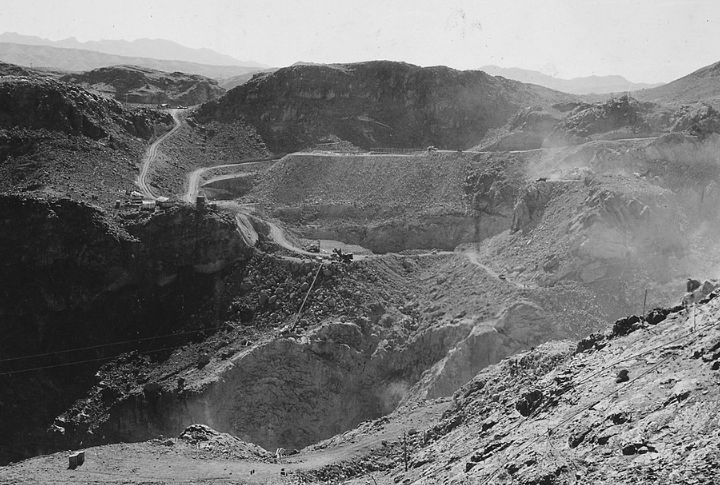
A Purpose Fulfilled, Then Abandoned
Wikimedia Commons

Once the dam stood complete, the railroad had fulfilled its purpose. With no further loads to transport, its tracks gradually fell into disrepair. Equipment was dismantled, and sections disappeared beneath Lake Mead’s rising waters. Though its service ended, its legacy endured and remained a vital yet invisible chapter in Hoover Dam’s history.

Rail Fragments Beneath Lake Mead
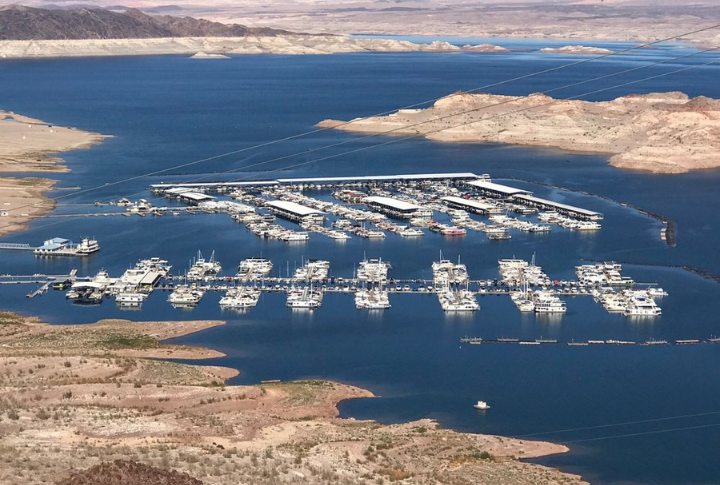
Rail Fragments Beneath Lake Mead
Summer G./Yelp

While much of the original rail system vanished, fragments still exist beneath the reservoir’s depths or along forgotten trails. Occasional droughts expose skeletal remains of tracks, rekindling interest in its past. Scattered relics in the form of rusted ties and eroded embankments offer glimpses into the infrastructure that once supported an engineering marvel.

Traces Of The Past Along Hiking Trails
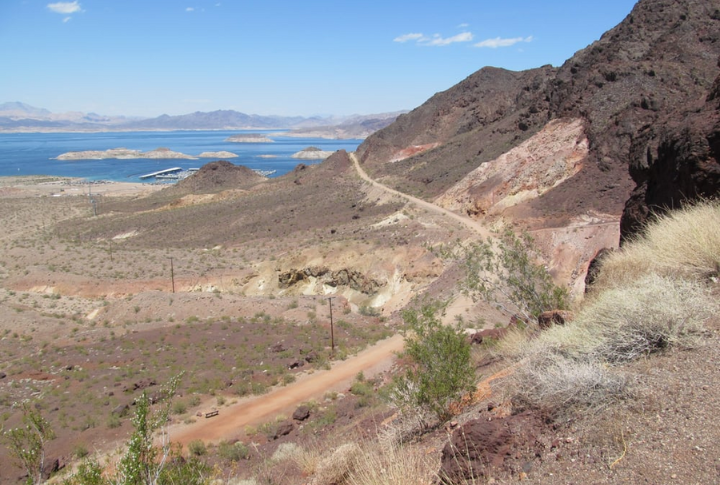
Traces Of The Past Along Hiking Trails
Daniel S./Yelp

For modern explorers, remnants of the abandoned railroad offer a window into history. Hiking trails lead to sections where rails once stretched toward the dam site to provide tangible links to the Depression-era industry. Whether walking these paths or researching archival records, visitors can rediscover the hidden role of this essential lifeline in Hoover Dam’s creation.

Legacy In Future Mega Projects
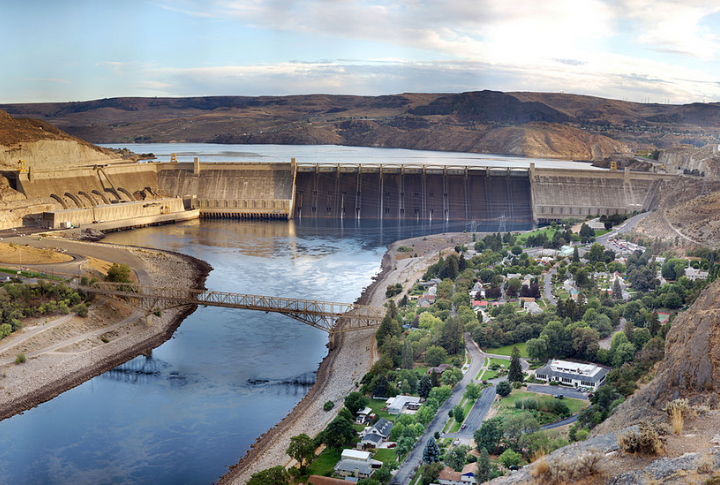
Legacy In Future Mega Projects
Farwestern/Wikipedia

The Lake Mead Railroad played a key role in Hoover Dam’s success, showcasing the importance of efficient transportation in large-scale construction. Its logistical planning influenced future projects like Grand Coulee Dam, shaping how infrastructure developments integrated rail systems to streamline material transport and workforce movement.

Continue Reading
Click to comment

Leave a Reply

Your email address will not be published. Required fields are marked *

History

The Unconquered Native American Tribe That Stood Its Ground

Published

on

Bain News Service/Wikimedia Commons

Throughout history, many Native American tribes faced overwhelming pressure to assimilate or submit, but one remained steadfast. Their resilience and determination became legendary. This is the story of the tribe that refused to yield and preserved its way of life against all odds.

The Yaqui Homeland And Identity

Wikimedia Commons

Sun-scorched deserts and fertile river valleys shaped the Yaqui way of life. They mastered agriculture, growing maize and squash while fishing the Rio Yaqui’s waters. Their spiritual beliefs, deeply tied to nature, strengthened their cultural resilience long before outside forces attempted to uproot them.

A Standoff With Spanish Conquistadors

Frederic Remington/Wikimedia Commons

When Spanish explorers arrived in the early 1600s, they expected surrender. Instead, they encountered skilled defenders who knew every crevice of their land. The Yaqui stood firm but also negotiated strategically. Rather than being overrun, they secured peace under conditions that preserved their independence—a rare victory at the time.

Cajeme’s Defiance Against The Mexican Government

Yoemem/Wikimedia Commons

A leader, a strategist, and a symbol of resistance—Cajeme guided the Yaqui through one of their most challenging eras in the 19th century. He planned defenses and orchestrated ambushes. In addition, he built strongholds and refused to bow to external rule. Even after his capture, his name fueled further defiance.

The Bacum Massacre’s Haunting Legacy

Wikimedia Commons

A church should have been a place of safety, but in 1868, it became a site of devastation. Mexican forces stormed a Yaqui village, taking the lives of over 120 people inside a place of worship. This brutal act only strengthened the tribe’s determination, ensuring their struggle for survival continued.

Forced Labor And The Long March South

Wikimedia Commons

Not all conflicts were fought on the battlefield. Thousands of Yaqui families were forced onto trains and sent to distant plantations, where they endured relentless labor under harsh conditions. Many never returned, but those who escaped carried their stories home, igniting new waves of resistance against displacement.

Seeking Refuge In The United States

James, George Wharton/Wikimedia Commons

Exile was not surrender—it was survival. Crossing into Arizona, many Yaqui found safety but faced new struggles. They built communities in Tucson and Phoenix, determined to preserve their traditions while adapting to an unfamiliar world. Against all odds, they proved that identity can endure across borders.

Unbreakable Rituals And The Power Of The Deer Dance

Augustus William Ericson/Wikimedia Commons

Ceremonies became acts of defiance. The Deer Dance, a mesmerizing blend of movement and music, honored their connection to nature and reinforced unity. Spanish priests once tried to silence it. Today, it remains a powerful symbol of endurance, performed by Yaqui dancers across generations.

Strategic Adaptation During The Mexican Revolution

Wikimedia Commons

In turbulent times, the Yaqui adjusted. Their fighters mastered quick, unpredictable strikes, using their deep knowledge of the terrain to outmaneuver much larger forces. Aligning with different revolutionary groups when necessary, they turned shifting alliances into opportunities for survival and influence.

Land Promises And Ongoing Struggles In The 20th Century

Agustín Casasola/Wikimedia Commons

Hope emerged in 1937 when President Lazaro Cardenas recognized Yaqui’s land rights. But official agreements didn’t stop encroachment. Water projects diverted their river, and industrial expansion threatened sacred lands. In addition, policies continued to undermine their sovereignty.

The Fight To Save The Rio Yaqui

Tomas Castelazo/Wikimedia Commons

The Rio Yaqui, a lifeline for generations, faces new threats. Government-backed projects have diverted its flow, endangering the Yaqui’s ability to sustain their communities. Protests, law battles, and organized movements have become their tools of resistance.

Continue Reading

History

10 U.S. Churches That Fell To Time And Circumstance

Published

on

DXR/Wikimedia Commons

Abandoned churches in the U.S. are more than just forgotten buildings; they are the remnants of communities that once found solace in these sacred spaces. Many of these churches carry tragic backstories that remain largely untold. Here are 10 abandoned churches in the U.S. with poignant stories.

City Methodist Church, Indiana

Peter Fitzgerald/Wikimedia Commons

Grand arches now frame shattered stained glass, whispering tales of a lost era. Once the largest Methodist church in the Midwest, this Gothic masterpiece closed in 1975 as Gary’s economy collapsed. Today, urban explorers wander its ruins, drawn to the haunting beauty of decay.

First Baptist Church of Augusta, Georgia

Jud McCranie/Wikimedia Commons

Marble columns still stand, but the congregation is long gone. Built in 1902, the First Baptist Church of Augusta, Georgia, was an architectural marvel before time and neglect consumed it. This particular church, distinct from the active First Baptist Church of Augusta established in 1817, now exists only as an abandoned structure.

Woodward Avenue Presbyterian Church, Detroit, Michigan

Andrew Jameson/Wikimedia Commons

Rising from Detroit’s skyline like a forgotten relic, this church once commanded attention with its towering spires and intricate Gothic design. Built in 1911, it flourished as the city’s population boomed. But as economic hardships gripped the area, attendance waned, and by 2005, the grand sanctuary fell silent.

St. Luke Baptist Church, Marianna, Florida

Ebyabe/Wikimedia Commons

Founded in 1867, it stood as a pillar of faith and resilience for the local Black community. As the years passed, its congregation thinned, and time took its toll on the structure. Now, weathered wood and crumbling walls remain, whispering stories of devotion, unity, and the passage of time.

Church of the Transfiguration, Buffalo, New York

Andre Carrotflower/Wikimedia Commons

Once a thriving sanctuary for Polish immigrants, the Church of the Transfiguration now stands as a ghostly monument to time’s passage. This church closed in 1991, which left behind its towering Gothic spires and crumbling stained glass. A roof collapse in 2020 sealed its fate, yet its haunting beauty continues to draw urban explorers and historians.

First Church of Christ, Scientist, Princeton, New Jersey

David Keddie/Wikimedia Commons

The charred ruins are a stark reminder of this church that was once a favorite among some. Flames consumed a century-old landmark, but its significance remains. This 130-year-old Princeton church was more than just a building—it was a cornerstone of faith and history.

Old Brick Church, Bacon’s Castle, Virginia

Natwebb/Wikimedia Commons

The Old Brick Church near Bacon’s Castle, Virginia, is a haunting relic of colonial America. It once echoed with sermons and hymns after construction in 1754 but fell into abandonment after the Church of England was disestablished. A fire in 1868 left it in ruins, yet its weathered brick walls still whisper stories of faith and resilience.

St. Michael’s Catholic Church, Cleveland, Ohio

Gradcol/Wikimedia Commons

In Cleveland, Ohio, a Gothic Revival church once stood as the heart of the Catholic community. Built in 1853, St. Michael’s Catholic Church was known for its stained glass windows and towering spires. However, by the 1970s, the congregation had dwindled, leading to its abandonment.

The Old Stone Church, Cleveland, Ohio

Confiteordeo/Wikimedia Commons

Built in 1820, it is one of the city’s oldest remaining structures. Originally a Presbyterian church, it witnessed the city’s early growth. As Cleveland expanded in the 1950s, the congregation moved to a larger facility, and the Old Stone Church was abandoned. Despite its emptiness, the church remains an iconic part of the city’s history.

Grace Episcopal Church, New York City, New York

Alex Lozupone/Wikimedia Commons

This church, founded in 1808, once symbolized the religious and cultural spirit of Manhattan. Known for its grand architecture and community involvement, it was a key part of the city’s Episcopal presence for over a century. The attendance declined as the 20th century wore on, and the church was eventually abandoned.

Continue Reading

History

5,000-Year-Old Volcano Showing How Ancient Communities Responded To Climate Catastrophe

Published

on

Andhika bayu nugraha/Wikimedia Commons

Around 2900 BCE, a cataclysmic volcanic eruption reshaped the world in ways that would be felt for generations. The massive blast spewed ash into the sky, blocking sunlight and triggering a dramatic period of global cooling. The effects were felt throughout the globe, and different cultures reacted differently. Here’s how.

The 5,000-Year-Old Volcano And Its Impact On Climate

Sowls A, Denies F, U.S. Fish and Wildlife Service/Wikimedia Commons

This volcanic winter lasted several years, and it made life harsh for Neolithic societies. Cooler temperatures led to devastating climate changes, pushing ancient communities to adapt quickly. As the darkness took over, populations sought answers through rituals and offerings, with many turning to symbolic acts.

Evidence Of Climatic Catastrophe In Ice Cores

Atmospheric Research, CSIRO/Wikimedia Commons

Ice cores from Greenland and Antarctica contain sulfate traces from the 2900 BCE eruption, and they provided key evidence of its global impact. These layers of sulfuric particles confirm that a volcanic event large enough to alter global climate occurred.

The Mysterious Sun Stones Of Denmark

ArniEin/Wikipedia

On the island of Bornholm, archaeologists uncovered 614 sunstones—flat shale pieces adorned with sun motifs and images resembling fields and crops. These items were buried in a ditch around 2900 BCE, likely in response to the environmental catastrophe.

The Community’s Unified Response To Disaster

Bureau of Land Management/Wikimedia Commons

Dr. Rune Iversen, an archaeologist involved in the study, explains how the shared nature of these offerings may have united the community in facing a dire, shared fate. Archaeologists speculate that the event marked a turning point in the community’s relationship with nature.

The Role Of Sun Motifs In Ancient Rituals

Mark Landon/Wikipedia

Sun motifs appear across cultures and are often used to symbolize life and fertility. The sunstones of Bornholm reflect this symbolic connection to sustenance. At a time when crops failed, ancient societies used these powerful symbols to express their dependence on the sun’s life-giving energy.

Famine And Crop Failures

Bailey, L. H. (Liberty Hyde)/Wikimedia Commons

Around the world, the eruption’s effects were felt. With temperatures dropping significantly, entire regions saw their harvests destroyed. The aftermath of such events caused massive food shortages, and it pushed ancient societies to resort to any means necessary to survive, including ritual offerings.

Neolithic Communities’ Resilience Beyond Rituals

Einsamer Schütze/Wikipedia

In addition to ritual sacrifices like the sunstones, Neolithic communities likely adapted their lifestyles to combat the prolonged volcanic winter. Changes in settlement patterns suggest a shift toward communal living, where pooling resources and sharing food became essential for survival.

Traces Of The Eruption’s Aftermath In Other Regions

Internet Archive Book Images/Wikimedia Commons

The 2900 BCE eruption left a distinct fingerprint far beyond Denmark. Evidence from regions like the Middle East shows increased reliance on drought-resistant crops and innovations in irrigation systems. These adaptive strategies reveal how ancient societies around the globe responded with ingenuity to counteract the disruptions.

Spiritual Beliefs Shaped By Natural Disasters

Arian Zwegers/Wikimedia Commons

The catastrophic eruption may have influenced long-term spiritual beliefs in Neolithic societies. Symbols like the sun became central to rituals, possibly reflecting a newfound reverence for celestial forces. This event likely marked a shift in how ancient communities interpreted natural phenomena.

The Birth Of Organized Leadership

Juan Carlos Fonseca Mata/Wikipedia

The volcanic eruption triggered lasting changes in governance among ancient societies. As resources dwindled, communities developed formal leadership roles. These structures enabled organized crisis responses, resource allocation, and ritual coordination. Archaeological evidence suggests this shift fostered social cohesion, reinforcing shared identities and long-term survival strategies.

Continue Reading

Trending

Copyright © 2025 CityStateZipCode.com